
Le Creuset in 2026 – Why One Pot Still Rules The Kitchen
Some kitchen purchases come and go. Le Creuset is not one of them. The French brand turned 101 this year, and its enamelled cast iron casseroles are still the pot people register for at weddings, hand down to their kids and quietly consider the most useful thing they own. In an era of air fryers, multicookers and gadgets that need firmware updates, there’s something reassuring about a pot whose entire technology is heavy iron and glass enamel.
A Chance Meeting, A Foundry And A Very Good Idea
Le Creuset began in 1925 when two Frenchmen, Armand Desaegher and Octave Aubecq, met at the Brussels fair. Armand knew casting, Octave knew enamelling and between them they worked out how to marry the two in a tiny village called Fresnoy-le-Grand. The foundry is still there. Each casserole is still cast in a sand mould that is broken to release it, which means no two pots are technically identical. It’s a nice piece of trivia to deploy at a dinner party while you’re lifting the lid.
What The Cast Iron Actually Does For Your Cooking
The cast iron core absorbs heat slowly and holds onto it, then spreads it evenly across the enamelled surface. That’s why a Le Creuset is so good at the things home cooks routinely get wrong. A ragu sits at a lazy simmer without catching on the base. A shoulder of lamb goes from stovetop sear to a four-hour oven braise in the same vessel. Bread bakes in the sealed pot with its own steam and comes out with a crust you’d normally need a professional oven to manage.
The enamel matters just as much. It doesn’t need seasoning like bare cast iron, it won’t absorb garlic or curry or last week’s fish and it won’t react with tomatoes or wine. You can leave a finished stew in the pot in the fridge overnight without anything going strange.
Start With The Signature Round Casserole
If you’re buying one piece, buy this one. The Signature range is the current generation, with a stainless steel knob rated to high oven temperatures, handles around 45% larger than the older Classic design (a genuine improvement when you’re lifting 5kg of braise out of a hot oven with a tea towel) and a tighter lid seal.
Sizing is where most people hesitate, so here’s the short version. The 20cm holds 2.4 litres and suits one or two people. The 24cm at 4.2 litres is the sensible family workhorse. The 26cm at 5.3 litres is the one to get if you cook big and freeze leftovers and the 28cm and above belongs to people who host properly. If you’re torn between two sizes, go up. Nobody has ever complained that their casserole was slightly too big.
The Rest Of The Range Is Worth A Look Too
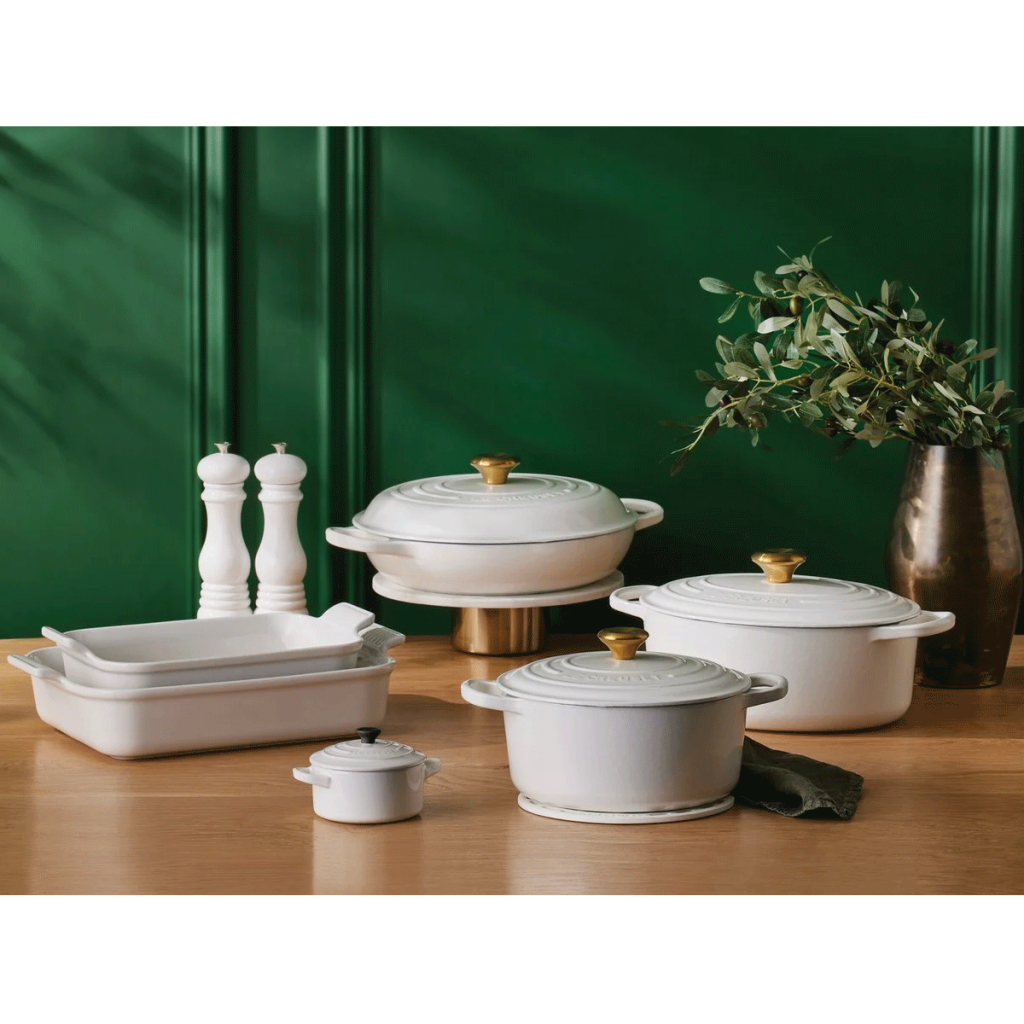
The Signature Round Skillet does a better steak crust than almost anything else in a domestic kitchen and then goes straight into the oven to finish. The cast iron grills, both square and the giant rectangle that straddles two burners, deliver proper char lines indoors. And the Signature Saucepans are the piece people forget about until they use one and realise their milk stopped catching.
One Warning For Induction Cooks
We wrote recently about induction going mainstream and the good news is that Le Creuset’s enamelled cast iron works beautifully on it. Cast iron is magnetic, so it’s compatible with every cooktop type going, including induction. The exception is the stoneware. Those gorgeous mugs, butter crocks, mixing jugs and mini casseroles are oven, freezer, microwave and dishwasher safe, but they will do absolutely nothing on an induction hob. Save them for the oven and the table.
Yes, The Colours Are Part Of The Point
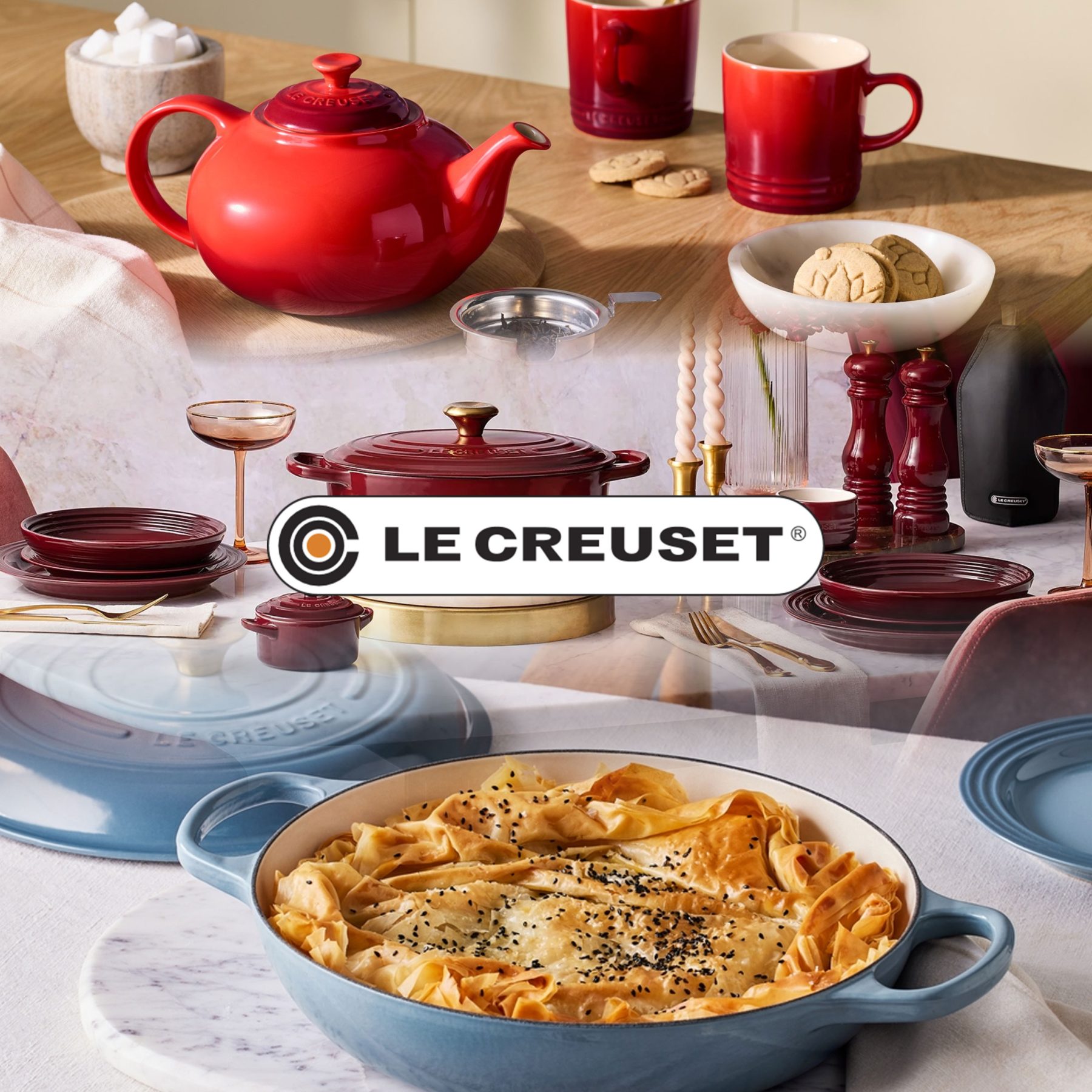
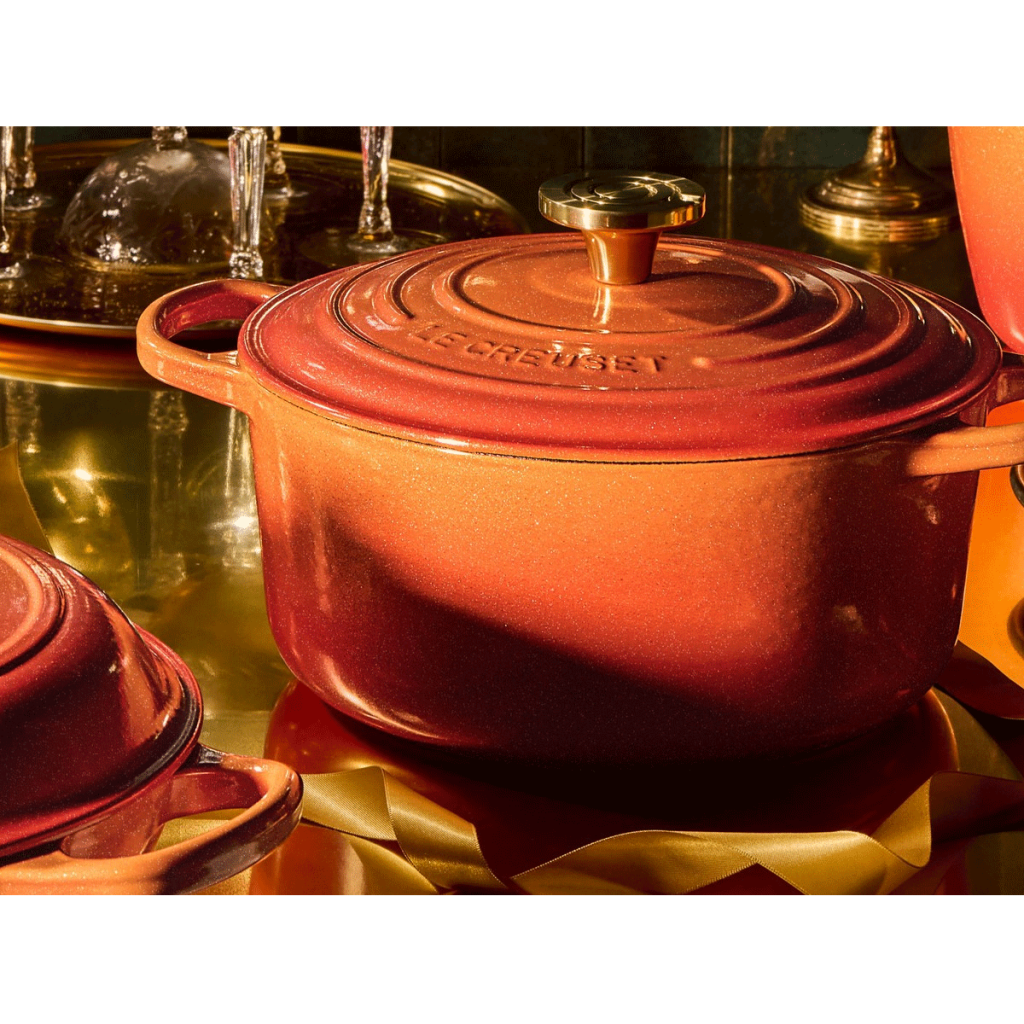
Volcanic Orange came first, apparently inspired by the colour of molten cast iron in the crucible. A century later the palette runs from Cerise Red to Marseille Blue, Deep Teal, Meringue, Crème and Satin Black, with new seasonal shades arriving regularly. Because the pot goes from the stove to the middle of the table, the colour does real work. It’s cookware and serveware and, on the open shelf, a bit of decorating.
Looking After It Is Easy, With Two Rules
Wooden or silicone utensils, not metal, so the enamel stays unchipped. And avoid dropping a cold pot onto a screaming hot burner or plunging a hot one into cold water, because thermal shock is the one thing cast iron genuinely dislikes. Otherwise, warm soapy water and a soft brush. Stubborn residue lifts with a simmer of water and a little bicarb. Hand washing is recommended and takes about a minute.
Is It Worth It?
Le Creuset is not cheap, and there’s no pretending otherwise. What you’re paying for is a piece of cookware backed by a lifetime guarantee that will almost certainly outlast your kitchen, possibly your house, and very likely you. Spread the price across thirty years of Sunday roasts and it starts looking like one of the better decisions you’ll make in a homewares store.